
Anyone who has handed a deal to someone else knows the itch. The proposal is going out tomorrow, the client matters, and you could just take one more look. Or rewrite the opening paragraph. Or sit in on the call, in case.
Micromanagement has a bad name, and mostly it has earned it. But the opposite, leaving people alone with deals they are not ready for, loses just as much business. Close attention is not good or bad in itself. What matters is who is getting it, on which deal, for what reason, and whether it ends.
When standing close is exactly right
A person on unfamiliar ground, unsure of the steps and worried about getting them wrong, usually wants someone close. Being left alone with it does not feel like trust. It feels like being abandoned. Clear direction takes the pressure off, gets them moving, and is the fastest route to the day they can do it alone.
- A new person. In the first weeks they do not know your pricing, your clients or how your deals usually go. Tell them what to do next and check that it happened.
- A first large deal. Someone who is at ease with small engagements can freeze when the deal is five times the usual size and there are four people on the buyer's side.
- A kind of deal nobody has done. A new service, a new industry, a first tender. There is no habit to fall back on, for them or for you, so you work it out together.
- A high-stakes negotiation. When one concession could cost a year of margin, two heads before the call are better than one apology after it.
What these have in common is the ground, not the person. Your most experienced salesperson may need you close on a first tender and need nothing from you on the ten deals they run every quarter. Decide the level of attention deal by deal.
When the same attention does harm
- A capable person on familiar ground. They have won this kind of deal many times. Checking each step tells them you have not noticed.
- Attention driven by your own nerves. It is the last week of the quarter, the number is short, and you start asking for updates twice a day. Nothing about the deal has changed. Only your mood has.
- Rewriting their emails. The email gets a little better, the salesperson learns that their draft is never the final one, and they stop putting effort into drafts.
- Joining calls uninvited and taking over. The buyer now believes you are the person to talk to, and will go around the salesperson from then on.
The cost is not only morale. Every deal you hold slows down to the speed of your calendar. And the person never builds the judgment you are covering for, so you will still be covering for it next year.
Inspecting a deal is not running it
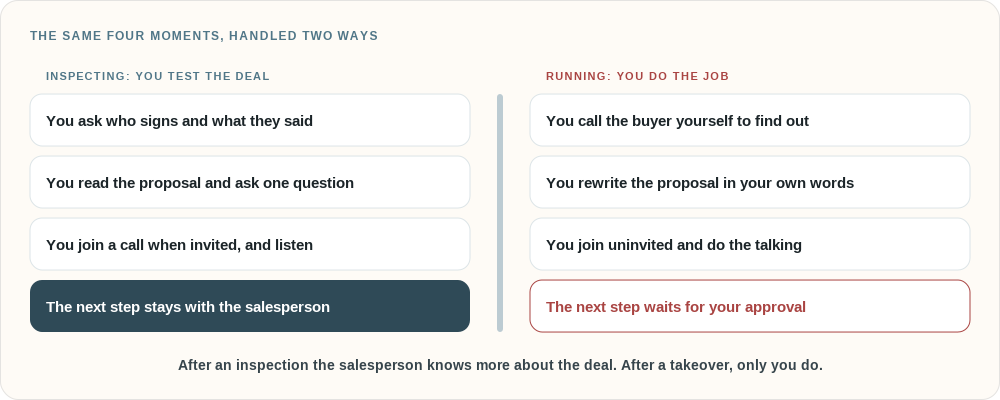
Most of the confusion comes from treating two jobs as one. Inspecting a deal means asking questions that test whether it is real: whether the buyer has a reason to act, whether the right people are involved, whether the close date is a fact or a hope. Running a deal means doing the salesperson's work for them. Inspect every deal that matters. Run very few.
Questions that inspect
- What happens to the buyer if they do nothing for six months?
- Who signs, and what have they said to you directly?
- What did the buyer agree to do next, and by when?
- Where does the close date come from: their deadline or our hope?
- What is the one thing most likely to stop this deal?
- What would you like from me on this one, if anything?
None of these tells the person what to do. When an answer is thin, the gap is theirs to close. The last question matters most: it lets a capable person say "nothing, thanks" and lets an unsure one ask for help without it looking like failure.
Agree the level before the deal starts
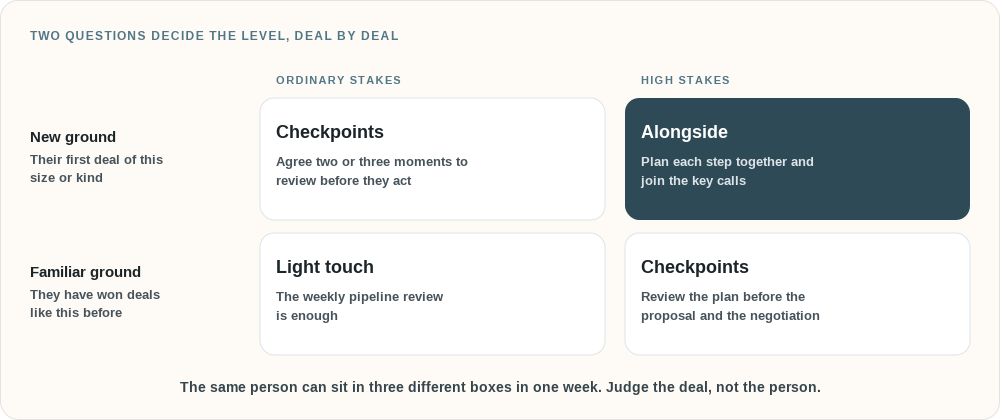
The same behavior reads very differently depending on whether it was agreed. A manager who turns up on a call unannounced is checking up. A manager who said two weeks ago "this is your first deal of this size, so I would like to plan the proposal with you and join the pricing call" is keeping a promise. Two questions settle the level: how familiar is this kind of deal to this person, and how much is at stake.
- 1
Alongside
You plan each step together before it happens and join the calls that matter. The salesperson still leads in front of the buyer wherever they can. Say plainly that this is about the deal being new, not about them.
- 2
Checkpoints
You name two or three moments in advance, such as before the proposal goes out and before the price is discussed. Between them the deal is theirs and you stay out of it.
- 3
Light touch
The deal comes up in the weekly pipeline review like any other. You hear about it in between only if they want a second opinion.
Always give the reason with the level. "I want to be close on this one because we have never sold to a hospital" is a fact about the deal. Without the reason, the person fills in their own, and the one they pick is usually "you do not trust me".
Stepping back out
Close attention is meant to be temporary. The usual failure is not starting too close. It is never leaving. Tie each step back to something you can see, and tell the person when you take it.
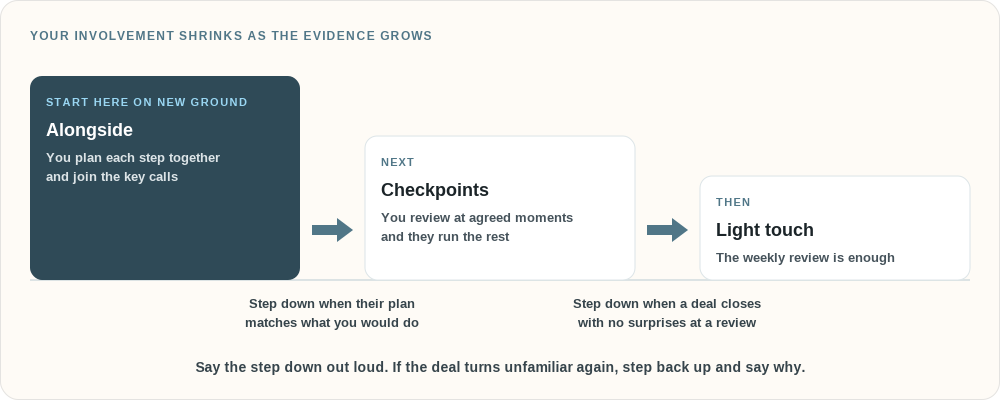
A simple way to do it: before you give your view, ask for theirs. If their plan is close to yours two or three times running, you no longer need to be in the planning. If a deal then runs through its checkpoints without a surprise, drop the checkpoints. And say it: "You have this. I will see it in the weekly review." If the deal later turns unfamiliar, move closer again and give the reason.
Signs you have crossed the line
- People stop bringing you bad news. You hear about a lost deal after it is lost, because telling you earlier meant you would take it over.
- Deals wait for you. Proposals sit in drafts until you have read them, and a week when you are away is a week when nothing moves.
- You are in every thread. Buyers copy you, or write to you directly, because they have learned who really decides.
- People ask what you would do before they have thought about it themselves.
One of these on one deal is normal. Several, across the whole team, means the team has been trained to wait for you.
If you are the one being micromanaged
- 1
Get ahead of the questions
Keep the deal record current and send a short update before you are asked: what happened, what is next, what you are worried about. A manager who already knows has less reason to check.
- 2
Propose the checkpoints yourself
Offer two moments when you will bring the deal to them, and ask to run the rest. It is easier to agree to a plan than to give up a habit.
- 3
Bring bad news early
Nothing brings a manager closer than a surprise. Each problem they hear from you first, with your plan attached, buys room on the next deal.
- 4
Name it if it continues
Use one concrete example and its effect, not a label: "When the proposal was rewritten, it went out four days later than the client asked for." Then ask what would need to be true for you to send the next one yourself.
Start this week
- 1List the open deals you are personally involved in. Next to each, write the reason. Where the honest reason is your own nerves, step out and tell the salesperson.
- 2For each deal that is new ground or high stakes, agree the level with the person who owns it: alongside, checkpoints or light touch, and why.
- 3In your next pipeline review, ask only questions. Give no instructions for one meeting and notice what is different.
- 4Ask each salesperson: on which deal do you want more of me, and on which one less?
The aim is not to be a hands-off manager or a hands-on one. It is to be close when a deal is beyond what the person has done before, to say so, and to be gone again as soon as they have shown they can carry it.
More on this from The Center for Leadership Studies: Micromanagement: when it works and when it doesn't