
Every firm that sells anything is already collecting sales data. Who enquired, where they came from, what was proposed, what was won, how long it took. Most of it is written down once and never looked at again. Being data-driven does not mean collecting more. It means using what is already there to make a handful of decisions better than instinct alone would.
Instinct still matters. An experienced person can read a buyer in ways no report can. The trouble is that instinct is also where favorite clients, recent wins and loud opinions live. Numbers are how you check it.
Start from the decision, not the dashboard
The common mistake is to begin with the data: build a dashboard, fill it with charts, and hope an insight appears. It rarely does. Begin with a decision you actually have to make, work out what you would need to know to make it well, and only then go looking for the number.
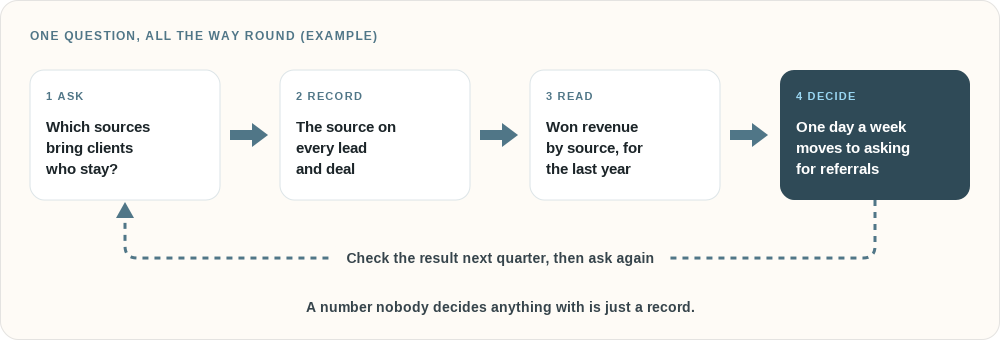
The last arrow is the one most firms skip. A decision made from data is a guess with better odds, and you only learn whether it was right by looking again later.
Five decisions your own records can improve
- 1
Where to look for new clients
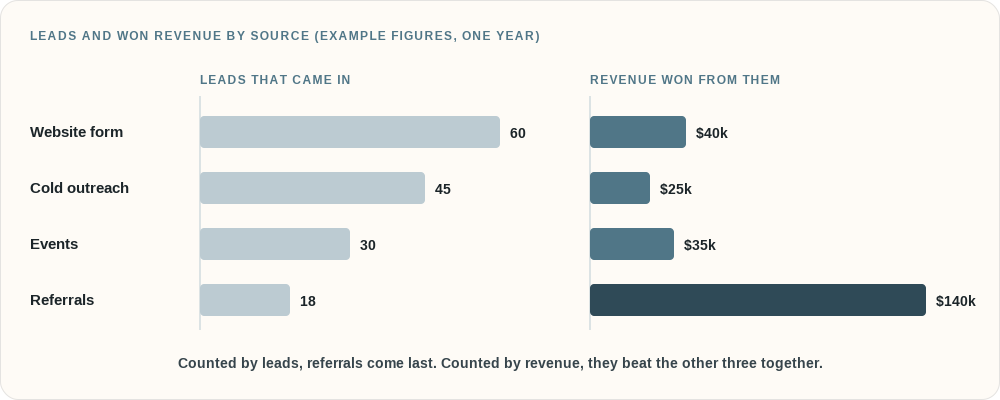
Count leads by source and you learn where the noise comes from. Count won revenue by source and you learn where the clients come from. The two lists are often in a different order, and time and budget should follow the second one.
- 2
Who to call first
Look back at the deals you won and note what they had in common on the day they arrived: the kind of firm, the role of the person, how they found you, how quickly they replied. Those shared traits are your ranking for the next batch of leads. The ones that look most like past wins get the first call.
- 3
Which clients to grow
In most firms a small group of clients produces a large share of revenue. List clients by what they have bought, and look at the top of the list for two things: who could use something else you offer, and who has gone quiet. Keeping and growing those few is usually cheaper than replacing them.
- 4
What to promise for the quarter
A forecast built from open deals, their stages and your own past win rates is harder to argue with than a number someone feels good about. It also shows the gap early, while there is still time to fill it.
- 5
What to say, and when
Group contacts by something real, such as industry, size or what they last bought, and write to each group about its own situation. Your records also show timing: how long after a first project the second one tends to come, and how long a client is usually silent before they leave.
A simple way to rank leads
You do not need software that scores leads for you. A short list of signals, agreed by the people who do the selling, gets most of the benefit. Pick three or four signals that your past wins shared, decide what each is worth, and sort new leads by the total. Revisit the list twice a year against the deals you actually won.
| Signal | Why it matters | Example weight |
|---|---|---|
| They match your best clients | Same kind of firm, similar size, a problem you have solved before | High |
| They came through a referral | Someone they trust has already vouched for you | High |
| The person can decide | Or can bring the decision maker into the next conversation | Medium |
| They replied quickly | The problem is on their mind this week | Medium |
| They named a date | A deadline on their side means the decision will actually be made | Medium |
What has to be true before the numbers deserve trust
Most attempts to sell by the numbers fail for ordinary reasons. The records are incomplete, people mean different things by the same word, or the reports exist and nobody opens them. Each layer rests on the one below.
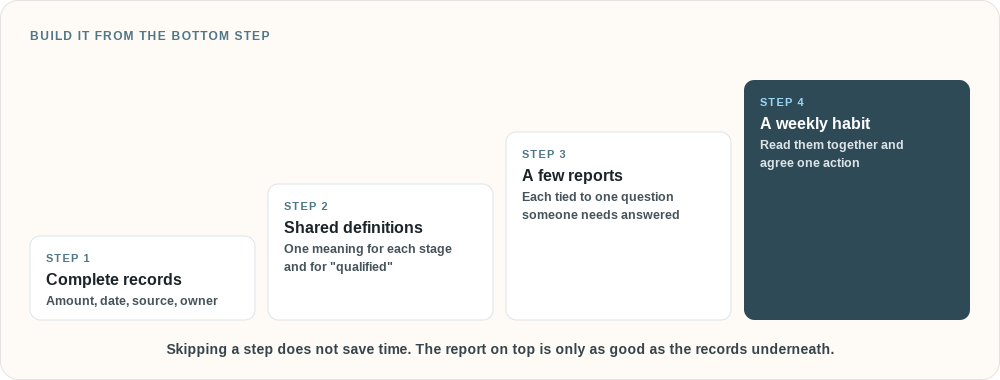
- Complete records. Decide the few fields every deal must have, such as amount, close date, source and owner, and keep that list short enough that people fill it in.
- Shared definitions. Write one sentence for what puts a deal in each stage, and one for what makes a lead qualified. Two people counting the same thing differently will produce a number neither believes.
- A few reports. One per question. Add a report when a new question comes up, and drop one when nobody can say what it is for.
- A weekly habit. The person who leads the team has to read the numbers in the open and decide something from them. If the leader ignores the reports, everyone else will too.
Four traps
- 1
Trusting small numbers
A win rate worked out from eight deals will swing wildly with one result. Before acting on a percentage, look at how many records are behind it. With a handful, treat it as a hint and read the individual deals instead.
- 2
Measuring what is easy
Calls made and emails sent are simple to count, so they get counted. They tell you about effort, not about results. Always pair an activity number with the outcome it was supposed to produce.
- 3
Using the numbers to blame
The moment a report is used to embarrass someone, people start tidying their records to look good instead of to be accurate. Use the numbers to find where someone needs help, and say so out loud.
- 4
Waiting for perfect data
The records will never be complete. Start with the question that matters most, fix the data behind that one report, and let the habit of using it pull the rest into shape.
Start this week
- 1Write down one decision you have to make this quarter about where to spend selling time.
- 2List what you would need to know to make it well, and check whether your records can tell you.
- 3Fix the gap in the records for your last twenty deals, not for all of them.
- 4Read the number with the team, agree one change, and put a date in the calendar to look again.
The firms that sell well from data are rarely the ones with the most of it. They are the ones that keep asking a plain question, look honestly at the answer, and change something because of it.